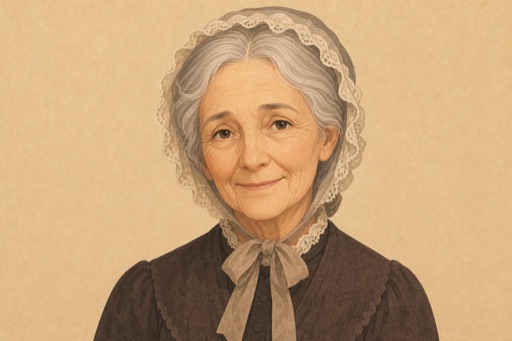
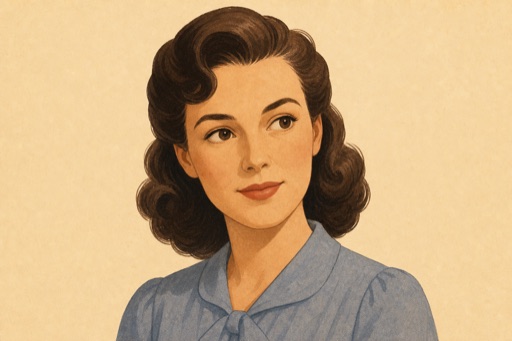
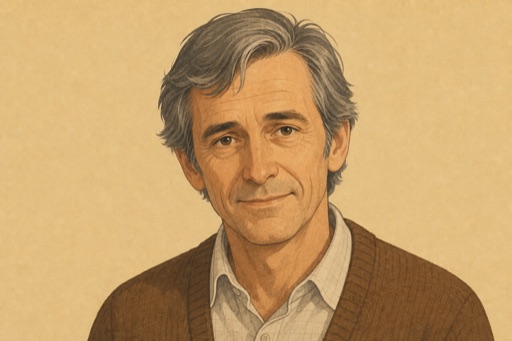
For the first time in the family's history, the question that had haunted every Warren, "is it coming for me?", had a possible answer. The hard part was deciding whether they wanted to hear it.
The letter, and why they wanted the healthy relatives too
The letter came on university stationery, addressed to Margaret. A research team was studying families like theirs, families where the illness that had taken Henry's mother, and her father before her, surfaced in every generation. What they wanted was blood: from relatives who were sick and relatives who were well, from as many branches as would agree.
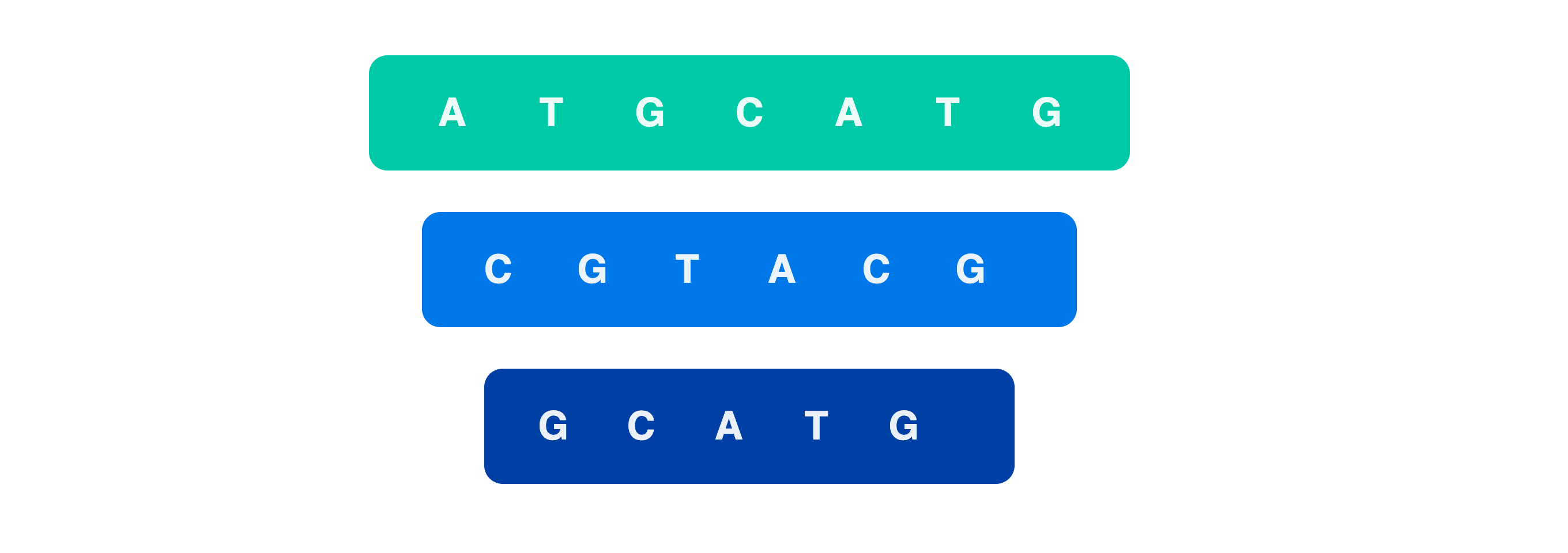
Sarah didn't understand, at first, why they'd want samples from the healthy ones. The counsellor explained it the way you'd explain a card trick you're about to see through. The scientists couldn't study this illness the usual way. Normally you start from the damaged part of the body and work backward to the cause, but Huntington's gave them no such thread to pull. So they were trying something sideways. If they collected DNADNADouble-stranded molecule storing genetic information as A, T, G, C bases. from enough relatives, they could hunt for a stretch of it that always travelled with the disease: present in the Warrens who fell ill, absent in those who stayed well. They didn't need to know what the geneGeneA stretch of DNA that codes for a functional product, usually a protein. did, only where in the genome it rode along. That was why they needed the well relatives too: as the "absent" half of the pattern, the control that made the signal readable.
The magazine article: how the hunt actually worked
They gave their blood (Henry, Margaret, Sarah, David, two cousins) and for years heard nothing.
It was David, of all of them, who ended up understanding it best, and he found out from a magazine. Months after they'd given their samples, he was in a waiting room and picked up a science magazine with a cover story on the disease hunt. He read it twice. A scientist named Nancy Wexler, whose own mother had died of Huntington's, had spent years travelling to a cluster of villages on the shore of a lake in Venezuela, where an enormous extended family (thousands of people, all descended from shared ancestors) carried the illness. That was the key the article kept circling back to: you needed a huge family, enough relatives across enough generations that a pattern could rise above chance. From that community's blood, a lab had, in 1983, found a marker on chromosomeChromosomeA single, long DNA molecule packaged with histone proteins into a compact structure that can be seen under a microscope. Human body cells contain 46 chromosomes (23 pairs), each carrying hundreds to thousands of genes. 4 that shadowed the disease down the generations. A genetic marker is not the geneGeneA stretch of DNA that codes for a functional product, usually a protein. and does not cause anything; it is simply a spot in the DNADNADouble-stranded molecule storing genetic information as A, T, G, C bases. whose location is already known and that comes in recognisably different versions from person to person. Because this particular marker sat so close to the illness geneGeneA stretch of DNA that codes for a functional product, usually a protein. on the chromosomeChromosomeA single, long DNA molecule packaged with histone proteins into a compact structure that can be seen under a microscope. Human body cells contain 46 chromosomes (23 pairs), each carrying hundreds to thousands of genes., the two were almost always inherited as a pair, so following the easy-to-read marker was a way to track the geneGeneA stretch of DNA that codes for a functional product, usually a protein. no one could yet see. The article called it a landmark: the first time anyone had located a disease geneGeneA stretch of DNA that codes for a functional product, usually a protein. purely by its address in the genome, with no idea yet what the geneGeneA stretch of DNA that codes for a functional product, usually a protein. actually made. David sat there realising that his own small vial of blood had gone into something exactly like that.
But the article was careful, and so was he. What they'd found in 1983 was a signpost, not the house. A predictive test built on that marker existed, but it needed DNADNADouble-stranded molecule storing genetic information as A, T, G, C bases. from several relatives, including someone already affected, and it still answered in probabilities, not certainties. The house itself was still being searched for.
The gene, and a test that needed only one tube of blood
Then, in 1993, the counsellor asked them all to come in. The geneGeneA stretch of DNA that codes for a functional product, usually a protein. had been found, the thing itself now, not the signpost, she told them.
And she'd clearly explained it many times, because she reached for an everyday picture. Imagine a word in the geneGeneA stretch of DNA that codes for a functional product, usually a protein. that's supposed to be said once, cleanly, but instead it stutters, CAG-CAG-CAG, too many times in a row. A usual copy repeats it a modest number of times. Once it repeats about 36 times or more it tips into disease, and (this was the part that made Sarah go quiet) the longer the stutter, the earlier in life the illness tends to arrive. Because they now knew the exact change, the doctor said, the test no longer needed the whole family lined up. It needed one tube of blood. From Sarah's arm alone, they could tell her whether she carried what had taken her grandmother, years, probably decades, before her hands or her walk would ever betray it.
Same knowledge, opposite choices
Sarah was eleven weeks pregnant. She had not told David yet.
They sat with the same information and stood up with opposite answers. David didn't want it. "If I test and it's bad, I've lost every ordinary day between now and when I'd have found out anyway. And if it's good, I'm not sure I'd let myself believe it." He chose to live, as he put it, "in the fifty-fifty": the plain arithmetic of a dominantDominantAllele expressed when at least one copy is present. illness, where every child of an affected parent has a one-in-two chance, the same odds his ancestors had lived under without ever having a name for them. Science had not moved those odds an inch. It had only changed what a person could find out, and David decided he would rather not.
For Sarah the not-knowing had curdled into something sharper, because she wasn't only asking about herself anymore. The clinic wouldn't hand her a result that same afternoon. There were counselling sessions first, built deliberately so no one learned a thing this size in one overwhelming sitting, and the counsellor mentioned, almost gently, that most people who could take this test choose not to. Knowing was possible now; wanting to know was still a different decision, and it was hers alone. She learned there were further options her grandmother could never have imagined, a way to test a pregnancy, and newer approaches that could keep the change from being passed on at all, and also a new kind of exposure, because a result that might reassure her could just as easily be turned against her by an insurer. Privacy, suddenly, was a genetic question.
When the result finally came, Margaret opened the family Bible to the page of names, births and deaths in three kinds of handwriting, and tucked beside them the chart the counsellor had drawn: the same family, the same generations, redrawn in squares and circles. The oldest record the Warrens kept and the newest science had, without anyone quite planning it, become the same document.